
RENT vs. BUY
Not every workload belongs in the cloud, and not every project justifies a six-figure capital purchase. For teams running GPU-intensive work in AI, VFX, or scientific computing, there is a third path: renting dedicated bare metal hardware on flexible weekly or monthly terms. Unlike cloud GPU instances, you get physical hardware in your facility with full root access, no shared tenancy, and zero long-term commitment. Explore Skorppio’s GPU workstation and server rental catalog or see how renting works in five steps.
THE REAL COST OF BUYING GPU HARDWARE
Purchasing a multi-GPU workstation or server means committing $30,000 to $250,000 before a single training run starts. For many teams, that math never works.
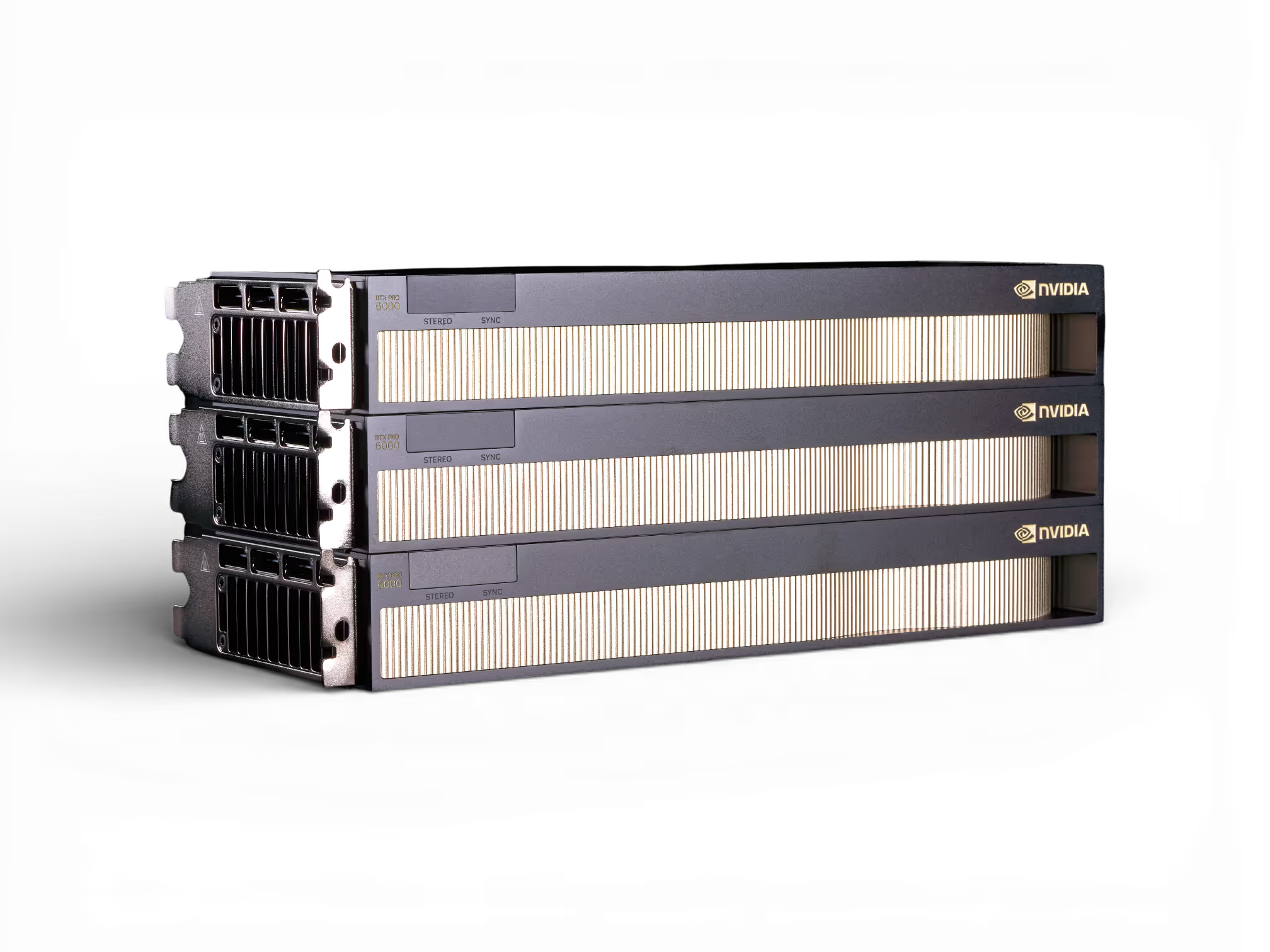
High-performance compute hardware is expensive to buy and expensive to own. A single NVIDIA RTX PRO 6000 Blackwell workstation starts above $30,000. A dual-socket EPYC server with eight GPUs exceeds $200,000. And those prices don't include the hidden costs: procurement cycles that take weeks, IT overhead for configuration and maintenance, physical space and cooling, and the certainty that NVIDIA will release a new architecture within 18 months of your purchase. For organizations with permanent, unchanging compute needs and the capital budget to support them, buying makes sense. But most teams don't fit that description. Projects scale up and down. Budgets shift quarter to quarter. And hardware that was cutting-edge at purchase becomes mid-tier within two years.
Unpredictable cloud compute costs
Cloud GPU instances bill by the hour, and costs compound fast. A single A100 instance on AWS can exceed $25,000/month at sustained usage. Egress fees, storage charges, and reserved-instance lock-ins make total cost nearly impossible to forecast until the invoice arrives.
GPU scarcity and delays
Buying current-generation GPUs at scale means navigating allocation queues, distributor markups, and lead times measured in months. Enterprise-grade cards like the RTX PRO 6000 Blackwell are production-constrained. Waiting 8 to 16 weeks for hardware means your project timeline starts on someone else's schedule.
Compliance and data residency issues
Cloud providers control where your data lives and how it moves. For teams working under ITAR, HIPAA, CMMC, or internal data governance policies, shared infrastructure introduces risk that no SLA fully mitigates. On-premise hardware keeps your data inside your walls, on your terms.
High CapEx for short-term needs
A six-month AI research project doesn't justify a six-figure hardware purchase. Capital expenditure ties up budget, creates depreciation liability, and leaves you holding hardware that may not match your next project's requirements. Renting shifts that spend to OpEx with no residual asset risk.
WHY RENTING HIGH-PERFORMANCE COMPUTERS MAKES SENSE
Renting eliminates the three biggest barriers to deploying GPU hardware: cost, time, and obsolescence risk.
When you rent compute hardware, you convert a capital purchase into a predictable operating expense. There is no depreciation schedule, no resale headache, and no maintenance burden. You select the hardware your workload requires, deploy it for exactly as long as you need it, and return it when the project wraps. For teams running time-boxed projects, pilot programs, or workloads that shift between GPU architectures, renting provides something neither purchasing nor cloud instances can: the ability to match dedicated bare metal hardware to the project instead of forcing the project onto whatever hardware you already own or whatever shared instances are available.
Compare rental pricing against purchase costs to see the difference.
BUY
$30K–$250K+ upfront. Depreciation starts day one. Add power, cooling, and disposal.
Resale drops 40–60% in year one. New architectures every 12–18 months. Today's buy is mid-tier in two years.
4–16 week procurement cycles. Add config, imaging, and rack setup before production.
Scaling up means another PO cycle. Scaling down means idle hardware. New architecture means sell and rebuy.
RENT
Flat weekly or monthly rate. No capital outlay. Predictable OpEx. Return when done.
Always current-gen. Upgrade as new architectures release. Zero depreciation on your books.
Ships in days, pre-configured. No POs, no committees. Self-service quoting with live inventory.
Scale GPU count up or down any time. Swap architectures mid-project. No long-term lock-in.
WHO SHOULD RENT INSTEAD OF BUY?
Renting makes the most sense for teams running finite-duration projects: a 90-day model training sprint, a 6-month VFX post-production schedule, a research grant with a fixed compute budget. It also fits organizations scaling into GPU workloads for the first time, where committing six figures to hardware you haven't fully stress-tested carries real financial risk.
Buying makes more sense when you have a permanent, well-understood workload that will run continuously for 3+ years, an in-house IT team to maintain and upgrade hardware, and the capital budget to absorb depreciation. If all three conditions are true, purchasing can deliver a lower per-unit cost over the hardware's full lifecycle. If any one is missing, renting likely wins on total cost of ownership.
Renting is the right call when your project has a defined timeline, your hardware needs may change, or your capital budget has better uses than depreciating assets.
The numbers tell a clear story. Purchasing makes financial sense only when hardware utilization stays above 80% for three or more years and your organization has the infrastructure to support it. Below that threshold, the total cost of ownership for purchased hardware, including procurement, maintenance, power, cooling, and depreciation, exceeds what most teams would spend renting equivalent systems for the duration they actually need them.
Rental pricing is transparent by design. You see the weekly or monthly rate before you commit. There are no surprise charges for egress, storage, or support. And when the project ends, so does the cost.
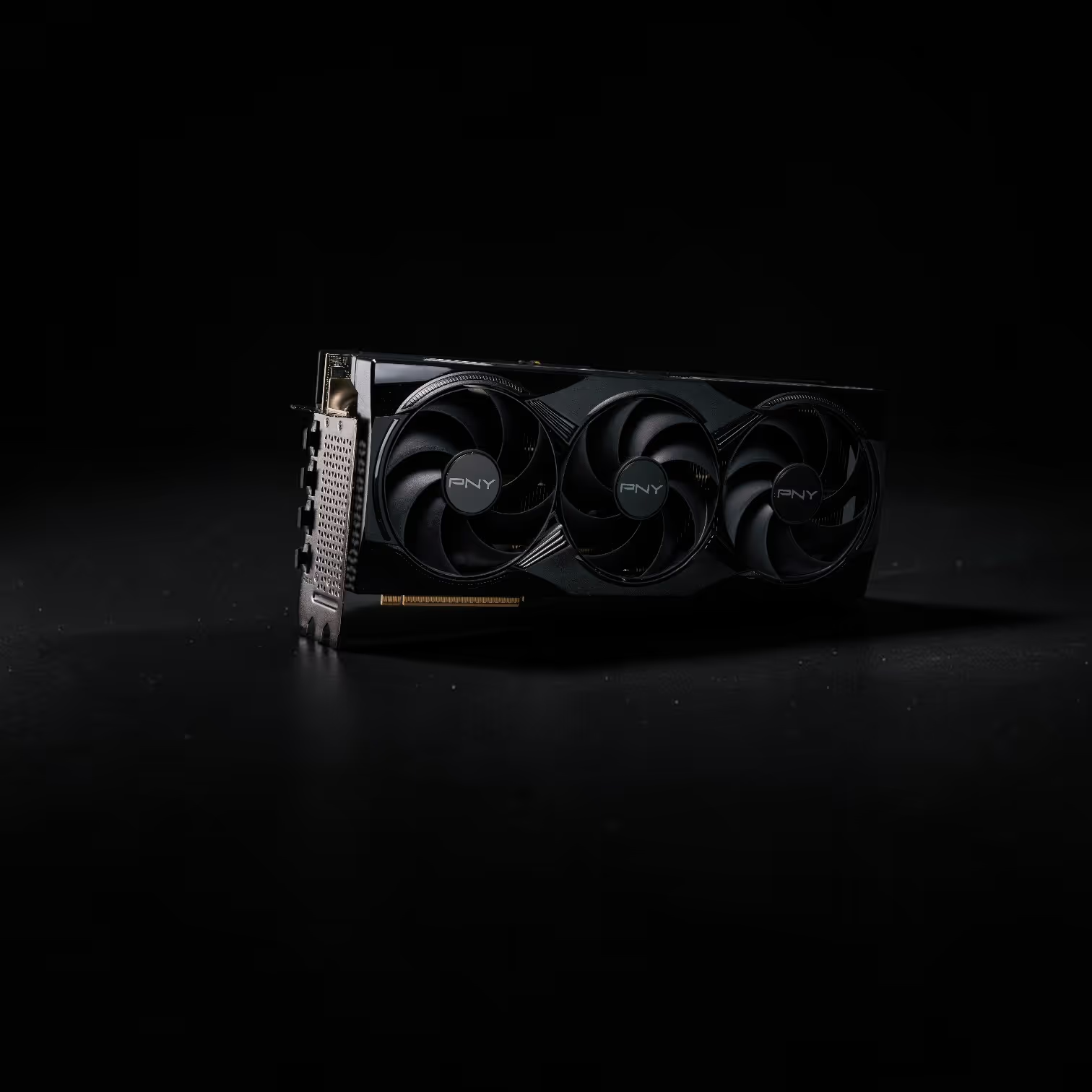

Whether you need a single workstation for a freelancer or a multi-node cluster for production inference, the question isn't just what to rent. It's whether buying ever made sense in the first place.
The GPU rental market has matured. Five years ago, renting a high-performance workstation meant settling for outdated hardware, rigid terms, and consumer-grade support. Today, rental providers deploy current-generation NVIDIA RTX PRO Blackwell and Ada Lovelace systems, pre-configured for specific workloads, with terms as short as one week. The shift from capital purchases to operational rentals mirrors what happened in enterprise cloud computing a decade ago, with one critical difference: rental hardware is physically yours for the duration of the term. It sits in your facility, on your network, under your physical control. No shared tenancy. No noisy neighbors. No data leaving your premises. This is what separates bare metal rentals from cloud GPU instances offered by AWS, Azure, or Lambda Labs.
The shift from capital purchases to operational rentals mirrors what happened in enterprise cloud computing a decade ago, with one critical difference: rental hardware is physically yours for the duration of the term. It sits in your facility, on your network, under your physical control. No shared tenancy. No noisy neighbors. No data leaving your premises.
Trusted by leading teams in AI, VFX, and innovation









For teams evaluating their next GPU deployment, the rent vs. buy decision comes down to three variables: project duration, budget structure, and tolerance for hardware risk.
If your project runs longer than three years with stable GPU requirements, buying delivers the lowest per-unit compute cost over the full lifecycle. If your project has a defined end date, variable compute needs, or capital constraints, renting delivers the same bare metal performance without the financial exposure.
Most teams that evaluate both options land on renting. Not because buying is wrong, but because the conditions that make buying optimal, including a permanent workload, surplus capital, in-house IT support, and a willingness to absorb depreciation, rarely all exist at the same time.

Questions? Answers.
Frequently asked questions
Is it cheaper to rent or buy a GPU workstation?
It depends on how long you need the hardware. Purchasing a multi-GPU workstation costs $30,000 to $250,000 upfront, plus ongoing maintenance, power, cooling, and eventual disposal. If your project runs less than three years or your utilization stays below 80%, renting typically delivers a lower total cost of ownership. Rental pricing converts that capital expense into a predictable weekly or monthly operating cost with no residual asset risk.
How fast can I get rental GPU hardware deployed?
Pre-configured rental systems ship within days. Standard configurations are deployment-ready out of the box. By comparison, purchasing enterprise GPU hardware involves procurement cycles of 4 to 16 weeks depending on GPU availability, internal approvals, and configuration time. Renting eliminates purchase orders, procurement committees, and setup delays.
What happens to rented hardware when my project ends?
You return it. There is no depreciation schedule, no resale process, and no e-waste disposal to manage. When your rental term ends, you can extend, upgrade to a different configuration, or simply send the hardware back. The cost stops when the project stops.
Do I get the same performance from rented hardware as purchased hardware?
Yes. Rental hardware is identical to purchased hardware. You receive dedicated bare metal systems with full root access, not virtualized cloud instances. The GPU, CPU, memory, and storage specifications are the same whether you rent or buy. The only difference is the financial model.
How does renting GPUs compare to cloud GPU instances?
Cloud GPU instances bill by the hour on shared infrastructure with variable performance. A single A100 instance on a major cloud provider can exceed $25,000 per month at sustained usage, plus egress fees and storage charges. Renting physical hardware gives you a flat weekly or monthly rate, dedicated bare metal performance, no shared tenancy, and full physical control. Your data stays on your network, not in someone else's datacenter.